
Agent TARS
Open-source AI coding agent for developers, integrating with IDEs, CLI, and cloud for various coding workflows.
Related Categories
Relevant Reads
Related AI Tools

Buda AI
Buda AI is a cloud-native multi-agent platform enabling teams to run AI agents with persistent memory, browser automation, and parallel execution.

Rootlenses
Rootlenses is an AI suite combining voice agents and data analytics to automate processes and enhance decision-making for enterprises.

Leapd
Leapd is an AI co-founder platform that uses autonomous AI agents to build, launch, run, and grow businesses 24/7.

Loopa
Loopa is an AI agent platform for workflow automation and content creation, enabling users to research, analyze, and execute complex tasks.
PaioClaw
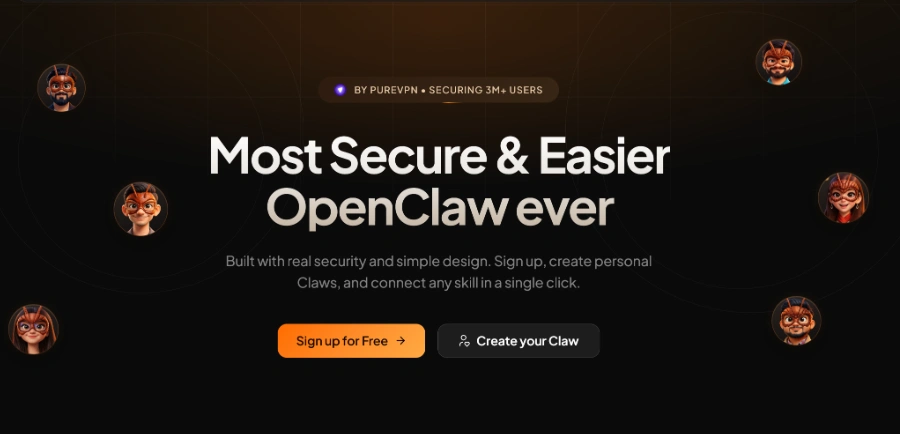
PaioClaw is an AI agent platform that sets up secure OpenClaw agents to automate tasks across various applications.

GPT‑5.6
GPT-5.6 is an advanced LLM model by Anthropic, offering state-of-the-art performance in software engineering, knowledge work, vision, and scientific research for complex tasks.
GrokBot
GrokBot is an AI agent and shared teammate from SpaceXAI, designed to learn and assist with various tasks.

Springbrand
SpringBrand offers tools and a marketplace to enhance DeepSeek Harness (dsh), an open-source, plugin-based AI agent harness for developers.
Agent TARS (Kilo Code) is available as an open-source AI agent for VS Code, JetBrains IDEs (IntelliJ, PyCharm, WebStorm), CLI, and cloud environments, allowing developers to use it across their preferred workspaces.
Provides access to over 500 AI models from 60+ providers, supporting frontier, open-weight, and local models. Users can utilize zero markup inference, bring their own API keys (BYOK), or leverage the Kilo Gateway.
Includes dedicated agent modes such as Code (write, refactor, ship code), Architect (plan complex features), Debug (identify, fix bugs), and Auto (intelligent model routing) to address various coding tasks and workflows.
Enables running AI agents in the cloud for long-running or resource-intensive tasks without consuming local resources. Also offers automated code review agents that analyze pull requests, suggest improvements, and catch bugs.
A unified API that provides access to hundreds of AI models through a single endpoint, featuring streaming capabilities, support for BYOK, and usage tracking.
Allows users to start a Kilo Session in one environment and seamlessly continue it on another platform, ensuring that AI agents, context, and progress follow across different devices and environments.
Intelligently routes tasks to the most appropriate AI model (Efficient, Frontier, or Free) based on capability, cost, and live session classification, optimizing both spend and performance for the work at hand.
Detailed Pricing Info
- Open Source and Transparent: MIT-licensed, allowing inspection, auditing, modification, and self-hosting of the source code, promoting trust and flexibility.
- Extensive Model Support with Cost Control: Provides access to 500+ AI models from various providers with zero markup, supporting BYOK and local models, and an Auto Model feature for intelligent cost-effective routing.
- Seamless Cross-Platform Integration: Works consistently across major IDEs (VS Code, JetBrains), CLI, cloud, Slack, and mobile, ensuring a unified experience regardless of the developer's environment.
- Enhanced Developer Productivity: Features like specialized agent modes (Code, Architect, Debug), persistent sessions, and agent management aim to accelerate development workflows and reduce context switching.
- Flexible Pricing for AI Inference: Users can choose how they pay for AI inference, including free models, BYOK, pay-as-you-go via Kilo Gateway, or credit subscriptions, catering to different needs and budgets.
- Separate Billing for Inference and Compute: Users need to manage platform access, AI inference, and cloud compute costs separately, which might add complexity to budgeting.
- Potential Learning Curve for Advanced Features: While offering extensive capabilities, integrating and fully utilizing all features like custom rules, MCP, and advanced agent orchestration might require an initial learning investment.
- Reliance on External AI Models: Although flexible in model choice, the quality and performance of AI assistance ultimately depend on the chosen underlying LLMs, which Agent TARS (Kilo) routes to but does not directly control.
- Tool name discrepancy: The provided context consistently refers to the product as 'Kilo' or 'Kilo Code', with no mention of 'Agent TARS', which could lead to confusion.
What is Agent TARS?
Is Agent TARS free?
What platforms does Agent TARS support?
Which AI models does Agent TARS support?
How does Agent TARS handle code privacy and data?
Related Topics
Write a Review
Community Feedback (0)
Ready to try Agent TARS?
Buda AI
Buda AI is a cloud-native multi-agent platform enabling teams to run AI agents with persistent memory, browser automation, and parallel execution.
Rootlenses
Rootlenses is an AI suite combining voice agents and data analytics to automate processes and enhance decision-making for enterprises.
Leapd
Leapd is an AI co-founder platform that uses autonomous AI agents to build, launch, run, and grow businesses 24/7.
Loopa
Loopa is an AI agent platform for workflow automation and content creation, enabling users to research, analyze, and execute complex tasks.
PaioClaw
PaioClaw is an AI agent platform that sets up secure OpenClaw agents to automate tasks across various applications.
GPT‑5.6
GPT-5.6 is an advanced LLM model by Anthropic, offering state-of-the-art performance in software engineering, knowledge work, vision, and scientific research for complex tasks.
GrokBot
GrokBot is an AI agent and shared teammate from SpaceXAI, designed to learn and assist with various tasks.
Springbrand
SpringBrand offers tools and a marketplace to enhance DeepSeek Harness (dsh), an open-source, plugin-based AI agent harness for developers.